
A practical guide to splicing, termination, testing, and certification

Fiber optic cabling is the backbone of modern networking—from data centers and enterprise LANs to global telecommunications. But not all fiber is the same. Cable type, connector choice, installation quality, and testing all directly affect distance, speed, and reliability.
This article breaks down fiber optic cables in a practical, blog-friendly way and explains how far fiber can really go, why it matters, and how installers ensure performance.
Fiber Optic Cable Types (Quick Overview)
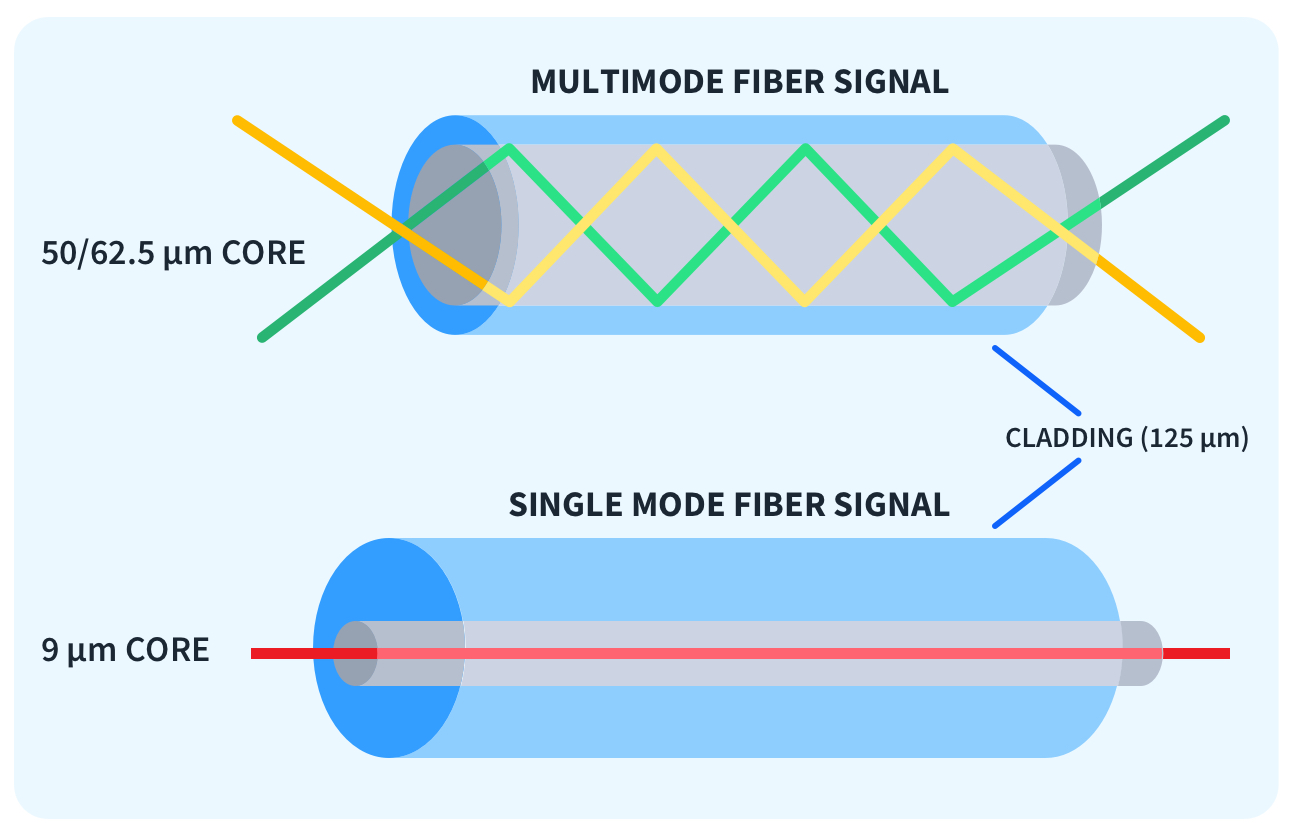
Single-Mode Fiber (SMF)
- Core size: ~9 microns
- Light source: Laser
- Best for: Long distances, telecom backbones, ISPs
Single-mode fiber carries light in a single path, reducing signal dispersion. This allows data to travel tens or even hundreds of kilometers with minimal loss.
Multimode Fiber (MMF)
- Core size: 50 or 62.5 microns
- Light source: LED or VCSEL
- Best for: Data centers, LANs, short-range links
Multimode fiber allows multiple light paths, which limits distance but reduces equipment cost.
Common multimode grades include OM1, OM2, OM3, OM4, and OM5.
Indoor vs Outdoor Fiber
- Indoor fiber: Fire-rated jackets (plenum/riser)
- Outdoor fiber: UV-resistant, moisture-blocked
- Armored fiber: Extra mechanical protection
Choosing the right jacket is just as important as choosing the fiber type.
How Far Can Fiber Optic Cable Go?
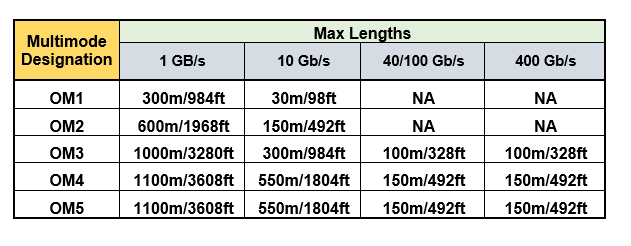
Multimode Fiber Distance Limits
| Fiber Type | Speed | Maximum Distance |
|---|---|---|
| OM1 | 1 Gbps | ~275 m |
| OM2 | 1 Gbps | ~550 m |
| OM3 | 10 Gbps | ~300 m |
| OM4 | 10 Gbps | ~400–550 m |
| OM5 | 10–100 Gbps | ~400 m (wavelength dependent) |
Key takeaway:
Multimode fiber is ideal for short, high-speed links, such as server-to-switch connections inside data centers.
Single-Mode Fiber Distance Limits
| Application | Typical Distance |
|---|---|
| Enterprise / Metro links | 10–40 km |
| Telecom backbone | 80–100+ km |
| DWDM systems | 100–1000+ km (with amplification) |
Distance is affected by:
- Fiber attenuation (dB/km)
- Connector and splice loss
- Optical transceiver power
- Network design (amplifiers, repeaters)
Key takeaway:
Single-mode fiber is the only realistic option for long-distance and future-proof networks.
Fiber Optic Connectors (Why They Matter)


Common connector types include:
- LC: Small, dense, modern data centers
- SC: Push-pull, telecom and enterprise
- ST: Legacy bayonet style
- FC: Threaded, vibration-resistant
Connector Polish Types
- UPC (blue): Low reflection
- APC (green): Best return loss, used in single-mode long-distance links
⚠ Mixing APC and UPC connectors will cause signal loss and possible damage.
Fiber Cable Fusing (Splicing)


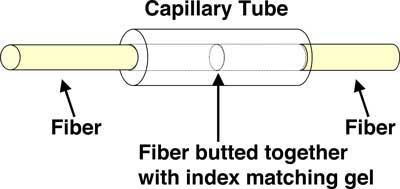
Splicing permanently joins two fibers and directly affects distance and performance.
Fusion Splicing
- Uses electric arc to fuse fibers
- Typical loss: 0.02–0.05 dB
- Best for long-distance and backbone networks
Mechanical Splicing
- Uses alignment gel and clamps
- Faster, but higher loss (0.2–0.5 dB)
For long distances, fusion splicing is always preferred.
Fiber Cable Termination

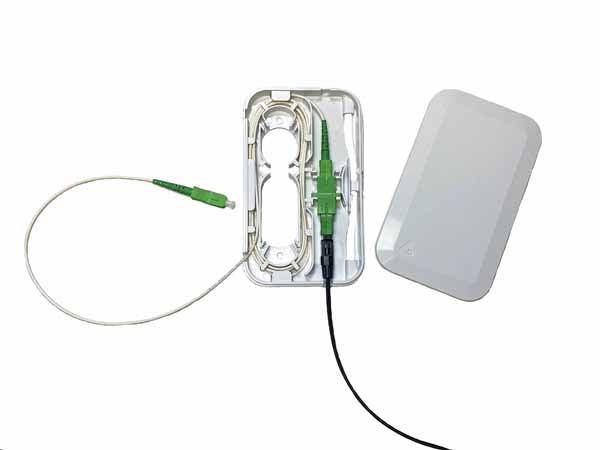
Termination is where connectors meet the network.
Common Termination Methods
- Pigtail splicing (recommended): Factory-polished connectors
- Field-installable connectors: Faster, less tooling
- Epoxy & polish: Traditional, time-consuming
Good termination minimizes insertion loss—critical for longer links.
Fiber Testing and Certification


Testing ensures the installed fiber meets distance and loss requirements.
Basic Tests
- Visual Fault Locator (VFL): Finds breaks and bends
- Power meter & light source: Measures total link loss
OTDR Testing
An OTDR measures:
- Fiber length
- Splice and connector loss
- Fault location
- Signal attenuation over distance
OTDR testing is essential for long-distance and single-mode links.
Fiber Certification: Why It Matters
Certification proves the fiber link complies with standards such as:
- ISO/IEC 11801
- TIA/EIA-568
- IEEE Ethernet specs
A certification report confirms:
- Maximum supported distance
- Signal loss within limits
- Pass/fail status
This is often required for warranties, enterprise acceptance, and audits.
Final Thoughts
Choosing the right fiber cable is not just about speed—it’s about distance, reliability, and future growth.
In summary:
- Use multimode fiber for short, high-speed indoor links
- Use single-mode fiber for long distances and scalability
- Minimize splice and connector loss
- Always test and certify your installation
A well-designed fiber network can last decades—if it’s done right from the start
