
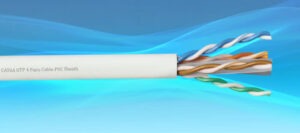
In today’s interconnected world, reliable and efficient networking is crucial for seamless communication and data transfer. Unshielded Twisted Pair (UTP) cables have become the backbone of most wired networks due to their affordability, flexibility, and ease of installation. However, not all UTP cables are created equal. This article aims to delve into the various types of UTP cables available and compare their features, applications, and performance to help you make informed decisions for your networking needs.
- Category 5e (Cat 5e) UTP Cable:
Cat 5e UTP cable is one of the most common types used in modern networks. It supports data transfer speeds of up to 1000 Mbps (Gigabit Ethernet) over a maximum distance of 100 meters. The cable consists of four twisted pairs of copper wires and provides adequate performance for most residential and small business applications. Cat 5e cables are backward compatible with older Cat 5 cables and offer better resistance to crosstalk and interference.
- Category 6 (Cat 6) UTP Cable:
Cat 6 UTP cable is an improvement over Cat 5e, designed to support higher data transfer rates and reduce crosstalk even further. It offers performance up to 10 Gigabit Ethernet (10 Gbps) over shorter distances (typically up to 55 meters). Cat 6 cables are backward compatible with Cat 5e and Cat 5 cables, making them an excellent choice for businesses that require higher bandwidth for activities such as multimedia streaming and video conferencing.
- Category 6a (Cat 6a) UTP Cable:
Cat 6a UTP cable is an enhanced version of Cat 6 that provides superior performance and bandwidth capabilities. It supports data rates of up to 10 Gigabit Ethernet over the full distance of 100 meters. Cat 6a cables have improved insulation and tighter twists in the wire pairs, which significantly reduce crosstalk and external interference. This makes Cat 6a ideal for demanding applications such as data centers, high-density environments, and installations where future-proofing is essential.
- Category 7 (Cat 7) UTP Cable:
Cat 7 UTP cable is designed to meet the most stringent networking requirements. It offers even higher bandwidth and lower crosstalk than Cat 6a, supporting data rates up to 10 Gigabit Ethernet over the full 100-meter distance. Cat 7 cables have individually shielded pairs and an overall shield to provide exceptional protection against electromagnetic interference (EMI) and radio frequency interference (RFI). Cat 7 cables are less common in standard installations but are used in specialized applications that demand maximum performance and reliability, such as industrial environments or areas with a high density of electrical devices.
Comparison of UTP Cable Types:
- Bandwidth and Data Transfer Speed: Cat 5e supports up to 1000 Mbps, Cat 6 and Cat 6a support up to 10 Gbps, while Cat 7 also supports up to 10 Gbps but with better shielding.
- Crosstalk and Interference: As we move from Cat 5e to Cat 7, the cables offer improved resistance to crosstalk and external interference, ensuring better signal quality and reliability.
- Distance Limitations: Cat 5e, Cat 6, and Cat 6a can transmit data up to 100 meters, while Cat 7 has the same distance limitation but with superior shielding.
- Applications: Cat 5e is suitable for most residential and small business applications, Cat 6 and Cat 6a are ideal for businesses requiring higher bandwidth, and Cat 7 is primarily used in specialized environments with demanding networking needs.
Conclusion:
Choosing the right UTP cable type depends on your specific requirements and budget. Cat 5e is a cost-effective choice for basic networking needs, while Cat 6, Cat 6a, and Cat 7 offer increased bandwidth and better protection against crosstalk and interference. Consider the distance, data transfer speeds, and future scalability to make an informed decision. Regardless of the cable type chosen, UTP cables continue to be a reliable and widely used solution for wired network connections, facilitating seamless data transfer and communication in various settings.
