
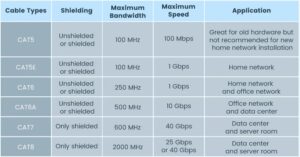
In the world of networking, the choice of network cables is a critical consideration that directly impacts the speed and reliability of data transmission. One key aspect of network cables is their compatibility with different Ethernet standards, including 10/100/1000 T-Base. In this article, we will explore the significance of network cables compatible with 10/100/1000 T-Base and how they play a vital role in modern networking.
Understanding 10/100/1000 T-Base:
The designation “10/100/1000 T-Base” refers to various Ethernet standards that dictate data transmission speeds. Each number in this designation represents a specific data transfer rate. Let’s break it down:
- 10 Mbps (Megabits per second): This is the first number in the designation, representing a data transfer rate of 10 megabits per second. This standard is known as 10Base-T and is one of the earliest Ethernet standards.
- 100 Mbps: The second number, 100, indicates a data transfer rate of 100 megabits per second. This standard is referred to as 100Base-TX and is widely used in networks for faster data transmission.
- 1000 Mbps or 1 Gbps (Gigabit per second): The third number, 1000, signifies a data transfer rate of 1000 megabits per second or 1 gigabit per second. This standard is known as 1000Base-T or Gigabit Ethernet and offers significantly higher data speeds compared to its predecessors.
Importance of 10/100/1000 T-Base Cables:
The choice of network cables compatible with 10/100/1000 T-Base is essential for several reasons:
- Speed Compatibility: Different Ethernet standards require specific cable specifications to support their respective data transfer rates. Using the appropriate cable ensures that your network can operate at the desired speed. For example, Gigabit Ethernet (1000Base-T) requires cables capable of handling 1000 Mbps.
- Reliable Data Transmission: 10/100/1000 T-Base cables are designed and manufactured to meet the rigorous requirements of their respective Ethernet standards. This ensures reliable and consistent data transmission, minimizing the risk of signal degradation or interference.
- Future-Proofing: Investing in 10/100/1000 T-Base cables allows you to create a network infrastructure that is capable of accommodating future advancements in technology. As network demands increase, having the right cables in place ensures your network can adapt without requiring costly cable upgrades.
- Interoperability: Networks often consist of a variety of devices with different speed capabilities. 10/100/1000 T-Base cables provide the versatility needed to connect devices operating at various data transfer rates, ensuring seamless communication.
- Cost-Effective: While Gigabit Ethernet offers significantly higher speeds, it’s essential to select the appropriate cable for your specific needs. For many applications, 10/100 Mbps Ethernet remains sufficient, and choosing the right cable can be a cost-effective solution.
Conclusion:
Network cables compatible with 10/100/1000 T-Base Ethernet standards are the backbone of modern networking. They enable efficient data transmission at varying speeds, ensuring the smooth operation of networks in a wide range of applications. By understanding the significance of these cables and selecting the right ones for your network infrastructure, you can achieve optimal performance, reliability, and future-proofing for your digital communications.
